

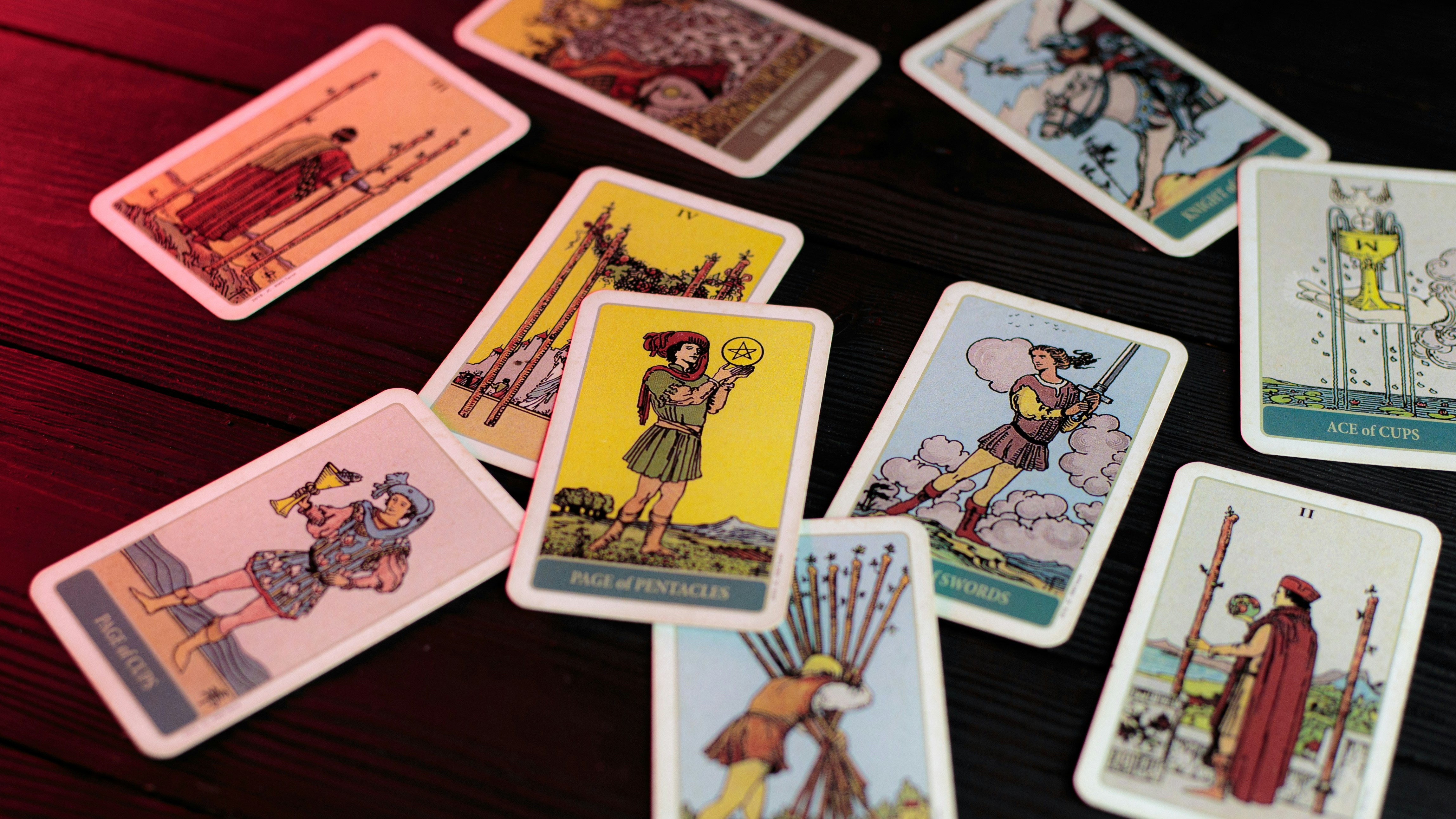
Have you ever drawn a court card and felt stuck, wondering who this Page or Queen might be? You’re not alone. The court cards often feel like the most confusing part of the tarot deck—partly because we’re taught to see them as “types” of people rather than as dynamic energies. But when we shift from stereotypes to archetypes, these cards start to make a lot more sense. They stop being one-dimensional characters and become reflections of the many ways we move through the world.
Archetypes, Not Stereotypes
It’s easy to fall into the trap of thinking a King of Swords is always a cold intellectual or a Page of Cups is always a dreamy artist. Those quick associations can be useful when you’re learning, but they limit what these cards can show you. Archetypes are bigger than personality labels—they’re energetic patterns that exist in all of us. The court cards are like mirrors, each representing a way of thinking, feeling, or acting that you might embody in a given moment.
A stereotype flattens a person into a single trait. An archetype expands them into a living story. When you think of the Queens, for example, they aren’t just “feminine energy.” They represent maturity in their element: how we nurture, protect, and guide. Pages, on the other hand, carry beginners’ energy: curiosity, enthusiasm, and openness. Seeing the court through that lens means you’re not just memorizing meanings—you’re recognizing patterns that already exist in your life.
The Four Families: Fire, Water, Air, and Earth
Each suit in the tarot expresses its own language, and the court cards are the “people” who speak it.
- Wands (Fire) bring passion, courage, and creativity. The Page of Wands is the spark of inspiration, eager to try new things. The Knight runs with that fire, chasing ideas before they cool. The Queen tends it with purpose, and the King channels it into vision and leadership. You might notice this energy in a friend who can’t sit still with a new idea—or in yourself when you feel that rush of excitement to begin something.
- Cups (Water) speak to emotion and connection. The Page of Cups is the sensitive dreamer, the one who feels everything deeply but may not yet know how to express it. The Knight follows his heart wherever it leads. The Queen offers empathy and understanding, while the King models emotional maturity and calm presence. When you’re deeply listening to someone, or when you choose compassion over reaction, you’re stepping into this archetypal family.
- Swords (Air) represent thought, truth, and communication. The Page of Swords is curious—sometimes overly so—constantly observing and questioning. The Knight of Swords is all in, sometimes to a fault, charging forward with ideas. The Queen of Swords holds clarity and discernment; she’s not cold, just honest. The King of Swords thinks strategically, seeing the long view. You might notice this energy at work when you’re problem-solving or advocating for fairness.
- Pentacles (Earth) ground everything. The Page of Pentacles studies and plans. The Knight builds consistency, showing up day after day. The Queen creates stability and comfort, and the King masters the material world—resources, time, and responsibility. These archetypes live in moments when you focus on what’s tangible: your work, your health, or your home.
Seeing the Court in Everyday Life
Once you start recognizing these archetypes, you’ll see them everywhere. The Queen of Wands might be that confident friend who lights up a room. The Knight of Pentacles could be your reliable coworker who never misses a detail. But beyond that, you’ll realize you embody each of them at different times. You might move between the Knight of Swords when you’re pushing through a deadline, and the Queen of Cups when you’re comforting a loved one. The court cards are less about who and more about how.
When You Pull a Court Card
Next time one appears in a reading, resist the urge to identify it as someone specific. Instead, ask: What part of me—or my life—feels like this right now? Is this energy something you’re being invited to develop, balance, or recognize in another person? Sometimes, the card might point to a dynamic between you and someone else—like when your Page energy meets someone else’s King energy. Seeing the courts as roles rather than rigid identities helps readings become fluid and self-reflective instead of predictive.
Working with the Court Cards
If you’d like to deepen your connection to these archetypes, try journaling with them one suit at a time. Shuffle your deck and pull out all four courts from a single element. Lay them in order from Page to King and ask yourself:
- What stage of growth does each one represent?
- How do I see this energy in myself or others?
- Which one feels most natural to me right now?
You can also pull a single court card at the start of the week and treat it as a guide. Notice how that energy shows up in your thoughts, interactions, and choices. Over time, you’ll stop seeing the courts as strangers in fancy robes and start recognizing them as familiar facets of your own story.
Why This Shift Matters
When you approach the court cards as archetypes, tarot becomes less about guessing who’s who and more about understanding how energy moves through people. It helps you step out of stereotypes and into empathy—because every archetype, even the challenging ones, has value. The King of Swords isn’t harsh; he’s discerning. The Page of Cups isn’t naive; they’re open-hearted.In the end, these cards are reflections of us all. The more you engage with them, the more you’ll see your relationships, moods, and motivations mirrored back to you. The court cards remind us that life is full of evolving roles—and that we’re constantly learning how to embody each one with a little more awareness and grace.