

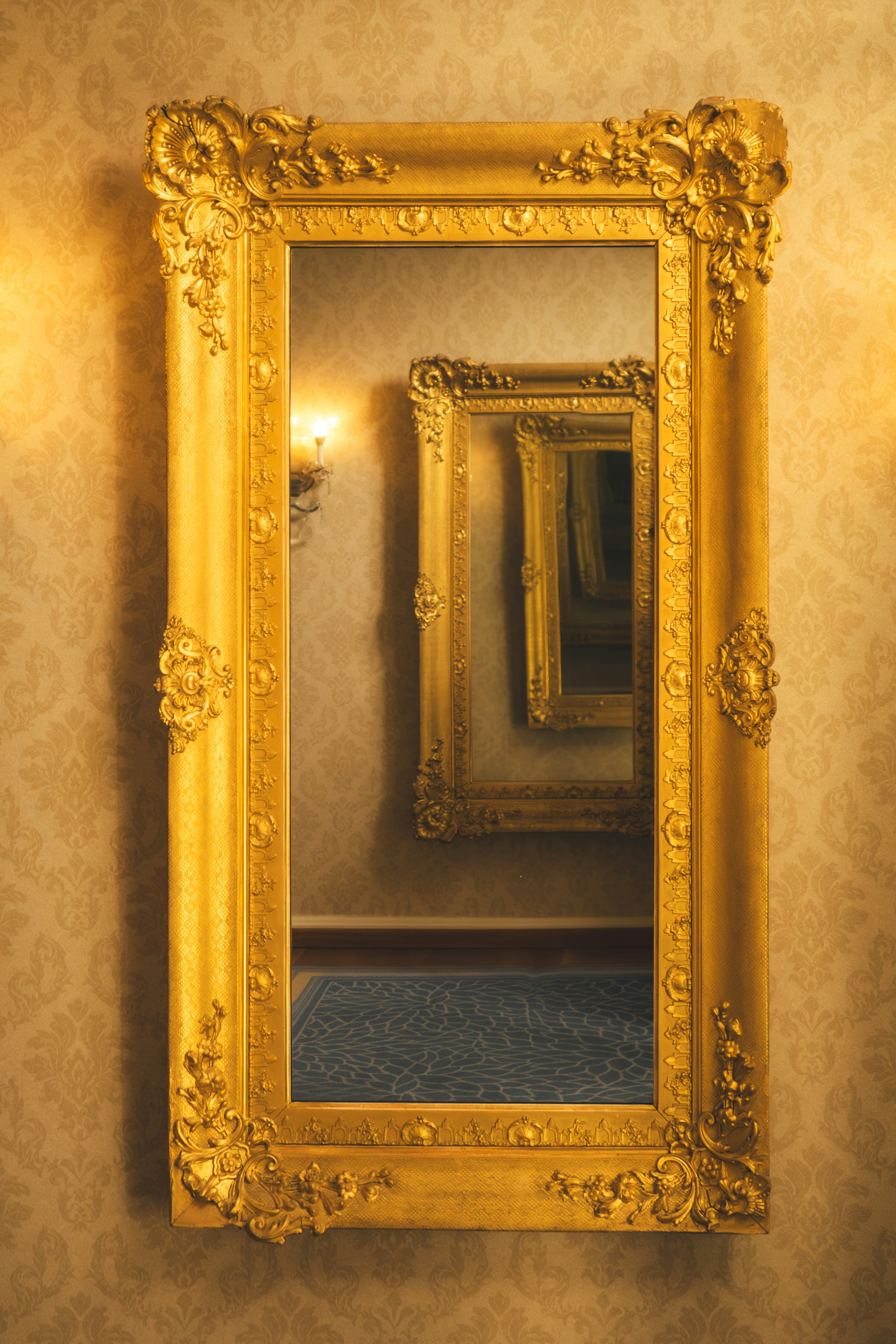
Have you ever found yourself lost in thought while staring into a mirror? Maybe it was during a quiet evening, when your reflection seemed to look right back through you. Those moments — when your mind softens and your awareness drifts — hold a hint of what scrying mirrors are all about. This ancient form of divination takes that quiet gaze and turns it into a practice for seeing beyond the surface — into intuition, symbolism, and the unseen.
Long before mirrors became household items, reflective surfaces held sacred meaning. Ancient cultures used water, polished metal, obsidian, and glass to catch glimpses of insight, spirit, or vision. The practice we now call scrying comes from the Old English word descry, meaning “to reveal” or “to make out dimly.” That’s fitting — because the purpose of scrying isn’t to see clear pictures or predict the future like a movie reel. It’s about perceiving subtle impressions, inner guidance, and images that arise from the quiet mind.
The Mirror as a Portal
A scrying mirror, sometimes called a black mirror, is typically made of obsidian or black glass. The dark surface isn’t meant for seeing your reflection clearly. Instead, it absorbs light and creates a void — a space that draws the gaze inward. Many traditions describe this as a “gateway between worlds” — but before you imagine something cinematic, think of it more as a bridge between the conscious and subconscious mind.
In ancient Mesoamerica, polished obsidian mirrors were used by the Aztecs in both ceremonial and shamanic practices. The deity Tezcatlipoca, whose name means “Smoking Mirror,” was associated with these mirrors as symbols of divine insight and transformation. The Greeks, Celts, and Egyptians all used reflective surfaces in similar ways — as tools to communicate with spirits, ancestors, or gods. Over time, as glass became more common, the practice adapted. People used bowls of inked water, darkened glass, or even the shiny backs of spoons when nothing else was available.
The Practice Then and Now
Historically, scrying was a sacred act, often performed in temples or private ritual spaces. Practitioners might enter a meditative state, light a candle behind them, and gaze into the mirror’s dark surface until images or impressions began to form. These weren’t always literal visions — often, they came as symbols, sensations, or intuitive nudges that required interpretation.
Today, modern practitioners approach scrying as a meditative tool rather than a fortune-telling trick. It’s about quieting the outer noise long enough to hear what’s stirring within. Some use it as part of spiritual work, while others see it as a mindfulness exercise — a way to access creativity, clarity, or inner calm.
Beginning Your Own Practice
If you’ve never tried scrying before, you don’t need to buy an ornate obsidian mirror. Start simple. A darkened glass bowl filled with water, a piece of black-painted glass, or even a tablet screen turned off can work in a pinch. What matters most is the intention and stillness you bring to the practice.
Here’s a gentle way to begin:
- Create a quiet space. Dim the lights and place a candle behind you or to the side. You want soft, indirect light — not a glare.
- Set your intention. You might ask for guidance, clarity on a situation, or simply open yourself to what arises.
- Gaze softly. Look into the dark surface, not at your reflection. Let your eyes relax. After a few minutes, your vision may blur slightly — this is natural.
- Observe without forcing. You might notice patterns, flickers, or subtle movements. Sometimes nothing visual appears, but ideas or feelings surface instead.
- Journal afterward. Write what you saw, felt, or thought. The meaning may unfold later, not in the moment.
The key is to release expectation. Scrying isn’t about control — it’s about receptivity. Think of it as a way of listening with your eyes.
The Science Behind Stillness
From a psychological standpoint, mirror-gazing can create a mild trance state. When you soften your focus, your brainwaves slow and shift into a more meditative rhythm, similar to daydreaming or deep relaxation. This opens space for your subconscious mind to surface — which is where intuition, memory, and creativity often reside. So while ancient practitioners might have described this as “seeing spirits,” modern understanding frames it as tapping into the intuitive mind.
There’s also something deeply grounding about using a mirror as your medium. It’s an everyday object — one we associate with seeing ourselves — now reimagined as a tool for seeing within ourselves. That’s what makes scrying both mystical and utterly practical.
Bringing It into Daily Life
You don’t need to wait for a full moon or a special ritual to work with reflective insight. The idea of scrying can extend into small moments of your day. Maybe it’s the few seconds you take to breathe and look out the window before responding to an email. Maybe it’s watching candlelight dance on your coffee mug as you let your mind wander. Anytime you allow space for reflection — literal or figurative — you’re practicing a form of scrying.
Over time, you might notice that scrying helps you tune into subtle feelings, creative ideas, or intuitive nudges you’d otherwise miss. It teaches patience, presence, and trust in your inner knowing. Like any meditative art, its magic grows with practice — not because the mirror changes, but because you do.So, next time you find yourself pausing before a mirror, take a breath. Let your reflection soften and your awareness settle. The surface may show only what’s in front of you, but with practice, you’ll start to sense what’s beneath. The real art of reflection isn’t just about seeing — it’s about perceiving.